“Social Media Is an Always-on Innovation Space,” Says Man Whose Brain Is Being Eaten by Parasitic Worm

Wolman

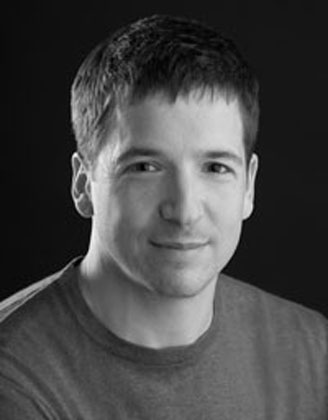
CHAPEL HILL, NC — Speaking to an entrepreneurship class, Cliff Thomas, a recent UNC alumnus working at a social media startup in California, described his field as “an always-on innovation space” while a ravenous parasitic worm rooted around in his brain.

“Who wants to be the next Zuckerburg?” began an enthusiastic Thomas, propping his feet up on the table in front of him and tilting his sunglasses back on his head as the worm delved deep into the hub of his central nervous system.

“I’ve run multiple Twitter and Facebook accounts for Fortune 100 brands,” he said as the worm wove its way through his frontal lobe, eating into the social media entrepreneur’s mind, “and what I have found, time and time again, is you have to be on top of your stuff. All the way from brainstorming, to mock-up, to delivery, things move fast. If you take a one-size-fits-none approach, you’re going to be behind the eight-ball in today’s social landscape.”

“The startup culture is intense,” continued the blazer-and-jeans-clad, worm-addled Thomas, “but I can tell you firsthand that it’s work hard, play hard. If you want into the game, everything starts with connections, and connections start on your social platforms. Networking is super crucial, and the payoff can be gnarly if you play your cards right.”

Thomas advocated constant connection with social media and recommended that students keep abreast of social media trends as the worm wiggled through his brain scrambling countless facets of his cognitive function.

“Tech channels move at the speed of innovation,” said Thomas as the parasite attached itself to his Broca’s area, feasting with reckless disregard. “If you’re not plugged in, then you’re falling behind. You have to constantly be asking yourself: Does my personal brand have what it takes to go viral?”

Thomas momentarily paused to check his phone as it buzzed with a message alert.

“What is social media? It’s connection at its purest form,” concluded the man whose thoughts were completely at the mercy of the worm. “Social media is the key to a successful entrepreneurial venture.”

Report: Campus-Wide Sustainability Use Unsustainable

CG_twitter1

CHAPEL HILL, NC – A recent report from the UNC Sustainability Office shows that the reserves of sustainability at UNC are being consumed at an alarming rate and could be depleted by 2022.

“Sustainability is quickly running out on campus,” said Cindy Pollock Shea, Director of the UNC Sustainability Office and lead author of the report. “Everyone from undergraduate activists to respected environmental and public policy researchers has become dependent on sustainability in countless aspects of their lives. The rate at which UNC uses sustainability is simply unsustainable.”

Following the sustainability boom of the mid-2000’s, UNC was among many universities that began devoting mass amounts of resources to sustainability. But Shea suspected problems early on.

“When the Sustainability Living-Learning Community opened in partnership with UNC Housing, I saw we were on a crash course,” she said. “And it’s only gotten worse with the Carolina Bicycle Coalition, the Environmental Law Project, the Greek Sustainability Council, the Environmental Affairs Committee, the Green Games, and HOPE Gardens ramping up their work.”

Veeral Saraiya, Sustainability Chair of the Graduate and Professional Student Federation, is among many on campus who have called attention to the implications of the report, which she says are broader than many realize.

“I’m glad the report is finally bringing attention to the issue, but it does come near capturing the full scope of the problem,” Saraiya said, noting that the research does not fully account for the heavy sustainability usage of the Net Impact Club, the Energy Club, EcoReps, CURB: New Urbanism, FLO Food, Epsilon Eta, Nourish International, the Zimride Ride Share Tool, the Carolina Green Pledge, UNC’s Climate Action Plan, the Renewable Energy Special Projects Committee (RESPC), the Roosevelt Institute for Energy and Environmental Policy, the Campus Sustainability Report, the Student Environmental Action Coalition (SEAC),  and the Kenan-Flagler Business School: Center for Sustainable Enterprise.

“If the university continues to overuse and rely this heavily on sustainability, most of UNC’s campus will be covered with solar panels by the year 2018,” she said.

Around campus, reactions to the report have been strong.

“This is eye-opening,” said student organizer Crispin Plesants. “I recently founded a student group dedicated to promoting sustainable lifestyles on campus, and our next meeting will be devoted entirely to tackling this issue.”

Amidst the widespread alarm, Larry Spoekler of the Foundation for Sustainable Development was among the few who defended current sustainability usage on campus.

“Look, this isn’t the sustainability your parents grew up on,” said Spoekler, “this is a highly refined and processed version of the crude environmentalism used in the seventies. Sure, we’re using more sustainability now, but we’re getting more out of it than ever before.”

Spoekler cited organizations like the MakeMeSustainable Carbon Calculator and Social Network, A Drink For Tomorrow, the Sierra Student Coalition, and Students Working in the Environment for Active Transformation (SWEAT) as examples of those using sustaninbility sustainably.

When asked in an emergency meeting of the Vice-Chancellor’s Sustainability Advisory Committee how the trends highlighted in her report might shape UNC’s future, Shea suggested that radical reform will soon be in order.

“Sure, sustainability is cleaner than it was, say, forty years ago,” she said, “but we cannot remain dependent until the last drop of sustainability is used up. We need a shift to a more viable bridge fuel, like entrepreneurship. Now there’s something this school can mine for years.”

Breaking: Top Aides in Christy Administration Ordered Lenoir Line Closing

09_1029_UNCDiningServ773pna4mw8x

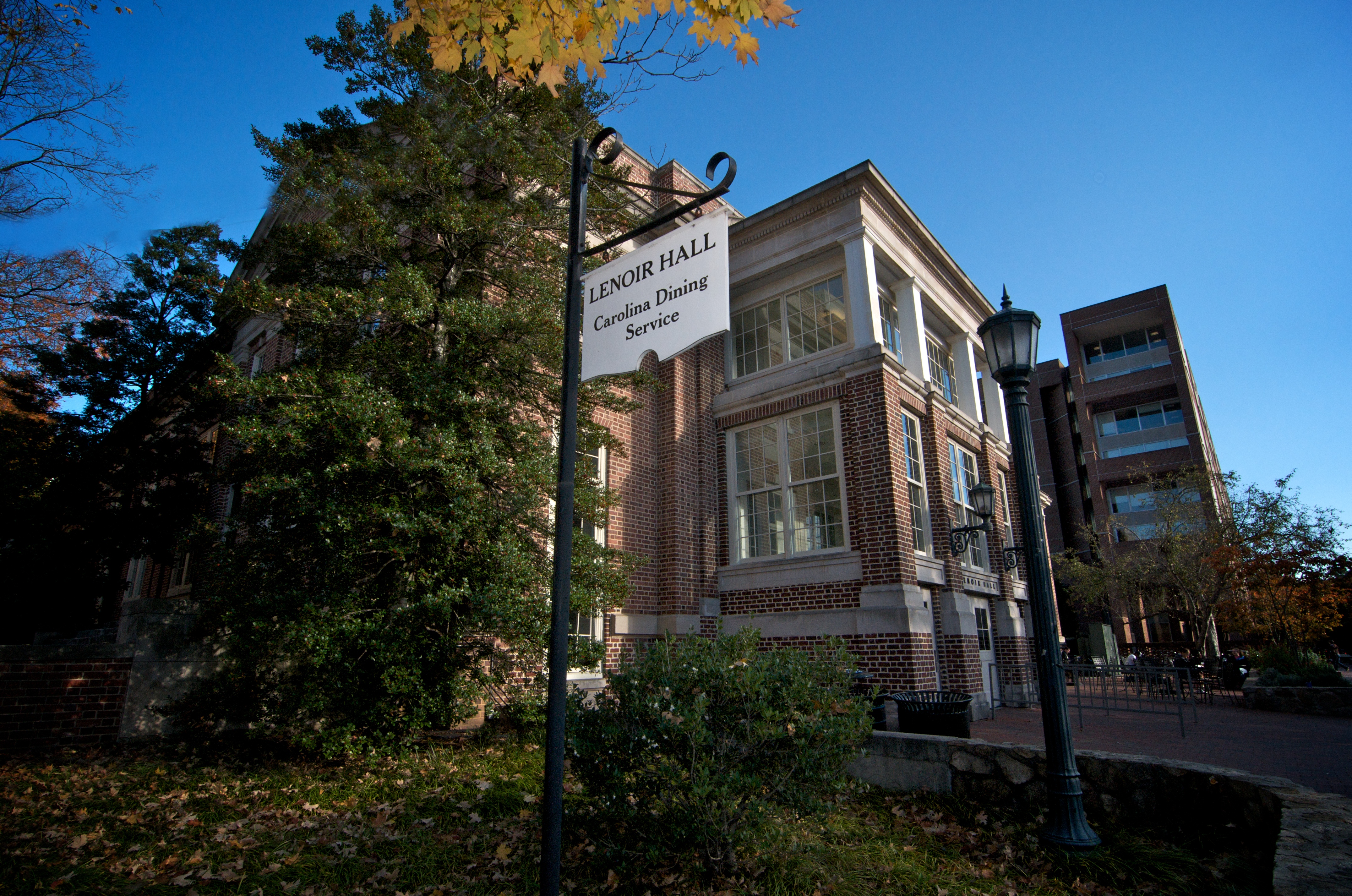
CHAPEL HILL, NC — According to newly released text messages and emails, top aides within the administration of Student Body President Christy Lambden ordered multiple line closings at Lenoir Dining Hall last semester as retribution against the student group FLO (Fair, Local, Organic) after it did not support Lambden in his SBP campaign.

“Time for some traffic problems at Lenoir,” read one text message from Lambden aide Julianna Tisdale to Bill Salazar, a Lambden appointee at Carolina Dining Services. Another message mocked hungry students stuck in the back-up, saying, “Those are the mouths of Lindsey voters.”

The line closings caused those waiting for dining hall service to be backed up to Graham Memorial. Many students were forced to skip class to get food, and one freshman with extremely low blood sugar was rushed to the nearby UNC hospitals. Lambden has said that his aide orchestrated the closings without his knowledge.

In a statement Christy called the actions, “deplorable.”

“I am outraged and deeply saddened to learn that not only was I misled by members of my staff, but this completely inappropriate and unsanctioned conduct was made without my knowledge,” Lambden said. “One thing is clear: This type of behavior is unacceptable, and I will not tolerate it because the people of UNC deserve better. This behavior is not representative of me or my administration in any way, and people will be held responsible for their actions.”

Documents revealed to The Minor last Friday show that many members of Lambden’s campaign and staff were deeply involved in the scandal and its cover-up, conspiring to pass off the lines closings as part of a “[Carolina Dining Service] study.”

FLO, whose support Lambden expected in his campaign, had surprisingly endorsed rival candidate Will Lindsey during last year’s election, causing “serious concern,” according to sources close to Christy’s campaign.

“We made our decision,” said Emily Magoll, president of FLO, of her organization’s endorsement. “That was in the past. What Christy’s administration has done is unconscionable. This is not how government is supposed to work.”

Lambden is expected to visit Lenoir tomorrow to apologize to dining hall patrons.

P.J. Hairston Excited To Dive Into Linguistics Minor

13iJC4.AuSt.156

CHAPEL HILL, NC – Returning from winter break with a lighter load of extracurricular commitments, junior P.J. Hairston said that he is excited to delve deeper into the Linguistics department during the rest of his time at Chapel Hill.

“I just took the intro course on a whim my first semester thinking it would be an easy A, but I actually ended up really enjoying the discipline,” said Hairston. “Unfortunately, I was unable to take many classes because I got so busy with other stuff. Now that my schedule is a little less crazy, I can’t wait to take Phonetics & Phonology, and Linguistic Structuralism: Sources and Influences.”

“Who knows, maybe I will now even have time to do some sociolinguistics research for [Professor] Roberge,” added Hairston wistfully.

Professor Roberge spoke highly of Hairston. “It’s refreshing to see students who are here to learn,” he said.

Hairston, who came to college undecided with regard to his major, said that he has enjoyed the freedom that the College of Arts and Sciences has allowed him to explore a variety of disciplines. He added that he hopes this semester’s courses in linguistics are the latest step in a long and beautiful academic journey.

“Maybe I’ll even go to grad school,” mused Hairston. “All I know is that, whatever comes next, I don’t want to be just another pawn in the corporate system.”

Students Celebrate Start of Spring Semester by Hastily Half-Assing Winter Break Projects

images

CHAPEL HILL, NC— In keeping with treasured tradition, UNC students rang in the spring semester by rolling up their sleeves, silently cursing themselves, and half-assing the numerous projects that they had resolved to complete over winter break.

Like so many of her peers, UNC sophomore Tara Jennings had a bold agenda for her time off from school. Having planned to update bylaws, compile a detailed events calendar, and write a strategic plan for the Honors Co-Ed Environmental Service Fraternity of which she is co-president, Jennings emailed the club listserv about a yet-to-be-scheduled general interest meeting soon after unpacking in her Morrison dorm.

Her hall-mate Jeremy Yimrish could relate. Soon after finishing final exams in December, Yimrish announced his intention to spend winter break reading a variety of novels and memoirs “just for pleasure, like [he has] been meaning to do forever.” Yesterday afternoon, Yimrish reportedly skimmed the first 12 pages of Malcolm Gladwell’s latest book while sitting on the toilet.

For junior Timothy Benson, winter break held professional ambitions. In search of an internship for next summer, Benson had resolved to rewrite his resume, compose cover letters, and apply for approximately two dozen positions in the few weeks between semesters. Cracking an energy drink in the terminal of his flight back to Chapel Hill, Benson updated the GPA on the resume that he used when he applied to the business school and emailed a friend who got an internship last year to ask her for old cover letters.

“Most of these aren’t due until February, anyway,” Benson thought to himself as he boarded his flight.

Asked to weigh in on the annual kick-off to the spring semester, social anthropology professor Julius DeLillo criticized students for their reliably underwhelming fulfillment of winter break goals.

“Students need to stop kidding themselves about what they can get done over break,” DeLillo said. “Maybe with maturity, they’ll learn to stop procrastinating and do better work,” he added before turing back to his computer, highlighting several paragraphs of a colleague’s syllabus, and pressing ‘Command+C’ on his keyboard.

Study: Loveable Fuck-Ups from High School 42% More Depressing This Winter Break

Graph

The study found an increasing rate of depression induced by loveable fuck-ups, up by a record 42% this winter break

CHAPEL HILL, NC — A recent study by UNC-CH researchers published in The American Journal of Public Health found that loveable fuck-ups from high school were more depressing than ever this winter break, 42% more so than last year.

For the study, researchers interviewed UNC students who had returned to their hometowns for winter break. They concluded that, “more than every before, college students are realizing that their loveable fuck-up friends from high school are turning into just plain fuck-ups, a phenomenon that has led to greatly increased rates of depression among those surveyed.”

Tyler Havel, a sophomore biology major who participated in the study, said that, soon after returning home for the holidays and reconvening with high school friends, he was saddened to realize that the lovable fuck-up of his old peer group  “might actually end up one of those people who just never really gets it, just sort of floating around Greensboro. I knew it happened to people,” Havel said. “I guess I just hadn’t noticed that it had already happened to Rory [Scodale].”

“He was always fun,” added Havel, whom Scodale recently informed that he had dropped out of UNC-Wilmingtion and enrolled part-time at Guilford Technical Community College. “I mean, he smoked a lot of weed, but we all did. I just assumed things would work out for everybody.”

Havel’s story is common, said Henry Torato, lead author of the study.

“We found that loveable fuck-ups from high school have fucked up more than ever this year,” he said, “in ways that are starting to feel permanent.”

Torato also noted that, in addition to new acts of fucking up, “things that seemed fine in high school, like playing 20 hours of video games a week or owning more than one bong become really depressing when students realize that [loveable fuck-ups] are still living that way.”

Tim Yoda, a junior public policy major, said that the depressing aspects of his fuck-up friends’ behavior had not hit home until this year.

“We all used to do stupid stuff,” he said. “I just assumed we were all going to stop and get serious at some point. I mean we took all the same AP classes. Now Marcus [Chang] works at AutoZone and apparently has Monica Pavoretti pregnant with a kid. We tried to hang out when I got back into town, but I didn’t know what to say when he told me how things were going. What happened?”

Torato said his team is also investigating higher rates of friends coming back from college being out-of-touch, stuck-up douches.

A List You’ll Totally Click On: Your Friend Group’s 5 BEST Quotes of the Semester

college-friends-on-campus

OMG, your friends are always saying these HILARIOUS things! Here are the 5 BEST from this semester.

1. “Susan, the peanut butter doesn’t go in that drawer!” – Trey

She was about to put the peanut butter in the drawer, with like her pencils. Susan. OMG. Classic. #TypicalSuze #ClassicTrey #Witty #Funny

2. “What are we, a bunch a MONKEYS!?” – Mike

We were all ROLLING on the floor when Mike said this. Laughing so hard. Can you believe he would say that? In public at Lenoir?! He was almost yelling!?!?! I bet other people were totally looking and were like, “why are they laughing?” They won’t understand because they aren’t #InTheGroup

3. “Well maybe she should have thought of that BEFORE she had sex with him.” – Rebecca

All I gotta say is #True. I was laughing TOO hard.

4. “Wait, wait, hold up, what?!” – Tim

Confused as always. Just pay attention! Omg, making me laugh just thinking back about it. #ConfusedTim 

5. “I’m just saying, when you think about it, most stereotypes aren’t made up, they come from somewhere.” – Mike

LOLZZZZZZZ. Omg, Mike’s actually such a racist.